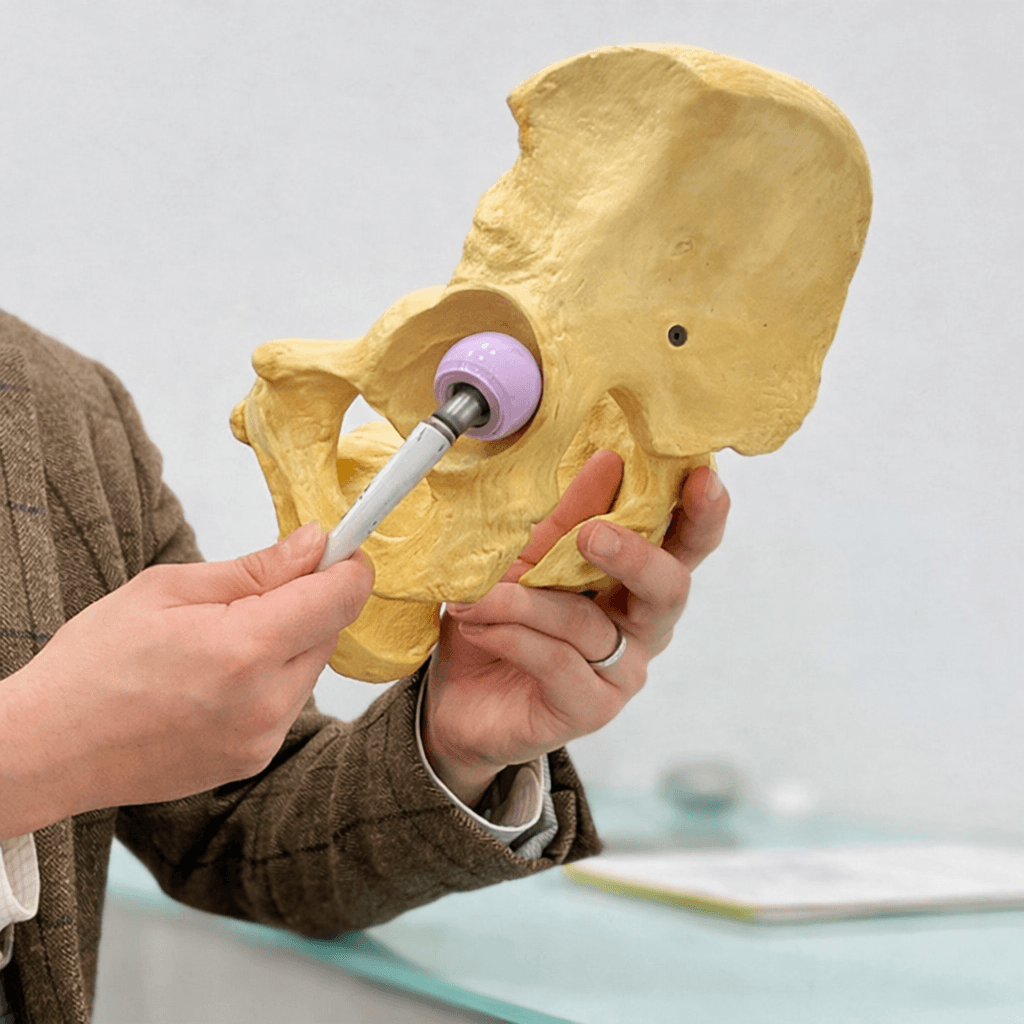
Introduction
Leg length discrepancy (LLD) occurs when one leg is shorter or longer than the other. This difference can sometimes arise after hip replacement surgery, potentially affecting a person’s mobility and overall quality of life. Although leg length discrepancy after hip replacement is a recognised complication that may appear years after the procedure, it is often overlooked. While mild differences between leg lengths are fairly common and might not cause noticeable issues, larger discrepancies can lead to discomfort and difficulties with walking or balance.
In this article, we will explore the causes, symptoms, diagnosis, and management of LLD following hip replacement surgery. Drawing on expert insights from Professor Paul Lee and the comprehensive care at MSK Doctors, we aim to provide clear and practical information for both patients and healthcare professionals.
What Causes Leg Length Discrepancy After Hip Replacement?
Several factors can lead to leg length discrepancy after hip replacement surgery . The skill and technique of the surgeon are crucial — ensuring that the new joint is positioned correctly and leg length is restored as closely as possible to the natural state. In addition, differences in anatomy before surgery or conditions such as arthritis or previous injuries can affect the outcome.
Many wonder what amount of leg length difference is considered normal. Research shows that most patients fall within a very small range: “60% were within 0.5 cm and 9% demonstrated a discrepancy greater than 1 cm” following hip replacement (Sarangi & Bannister, 1997). Another important finding is that gender may play a role; “limb length discrepancy remains a common issue, with gender identified as a significant factor influencing the occurrence of short limbs” (Ahmad et al., 2025).
Interestingly, one study found that although leg length discrepancy is very common—affecting over 90% of patients—clinical and radiological assessments do not always align well (Sudhir et al., 2009). This highlights the complexity of the issue. Larger discrepancies may cause symptoms such as limping or pain , which affect everyday activities.
Professor Paul Lee emphasises the importance of detailed surgical planning and intraoperative measurement to reduce the risk of LLD. MSK Doctors similarly prioritise personalised care and surgical precision to improve patient outcomes.
Recognising the Symptoms and Measuring Leg Length Discrepancy
Recognising the signs of leg length discrepancy after hip replacement is key to getting the right treatment. Patients might notice one leg feels shorter or longer, which can cause a limp, hip or knee pain, back discomfort, or problems with balance. Sometimes, pain in the buttock area after surgery is linked to an uneven leg length.
Healthcare professionals measure leg length using physical examination techniques—such as comparing fixed bony landmarks on the legs—as well as imaging methods like X-rays. Knowing when the difference becomes significant is important. Typically, a leg length difference of more than 1/2 inch (about 1.3 centimetres) or 2 centimetres is likely to produce noticeable symptoms.
Research tells us that “shortening of over 10 mm and lengthening of over 6 mm was perceived universally” by patients, meaning most people become aware of these differences (Sarangi & Bannister, 1997). However, it’s reassuring that “only 50% had discrepancies in the 1-10 mm range on imaging but more than 90% had excellent to good functional results,” showing that small differences don’t always affect how well patients function (Sudhir et al., 2009).
At MSK Doctors , experts carefully assess each patient to determine the extent of leg length discrepancy and guide suitable treatment.
Managing and Treating Leg Length Discrepancy: Evidence-Based Approaches
Managing leg length discrepancy aims to reduce discomfort and improve mobility as much as possible. For many, non-surgical options can be very effective. These include physical therapy and exercises designed to strengthen muscles and improve walking patterns after hip replacement. For minor differences, shoe lifts or orthotic inserts can help balance leg length and alleviate symptoms.
It’s important to understand that small discrepancies—“less than 6 mm shortening or 4 mm lengthening”—often go unnoticed and may not require treatment (Sarangi & Bannister, 1997).
In cases where non-surgical methods do not relieve symptoms, surgical intervention might be considered, though this is generally reserved for adults with significant discrepancies affecting daily life.
Many patients wonder if their legs will even out over time or how to fix one leg shorter than the other. While some length differences may reduce naturally during recovery, not all do. That’s why tailored treatment and professional support are essential.
Research also emphasises that “preoperative templating and intraoperative measurements by careful positioning and component orientation can decrease leg length discrepancy and improve functional outcomes” (Sudhir et al., 2009). The multidisciplinary approach at MSK Doctors , supported by Professor Paul Lee’s expertise, ensures that patients receive evidence-based, personalised care throughout their journey.
Long-Term Implications, Patient Rights, and Professional Support
Leg length discrepancy may have lasting effects if not addressed, including changes in posture and strain on the spine or other joints. These complications underline the importance of ongoing monitoring and management long after surgery.
Many patients ask, “Can I sue if one leg is longer after hip replacement ?” Legal options depend on individual circumstances and should be discussed with qualified professionals. What is crucial is that patients feel supported and empowered to raise concerns about their outcomes.
As one recent study notes, “precise diagnosis and control of LLD are essential for facilitating successful patient recovery and preventing functional impairment” (Ahmad et al., 2025). The team at MSK Doctors , along with Professor Paul Lee, provide continuous, compassionate care to help patients manage challenges associated with leg length discrepancy. Personalised advice, delivered within an evidence-based framework, remains key to success.
Conclusion and Disclaimer
Leg length discrepancy after hip replacement is a complex but manageable issue. Careful assessment, appropriate treatment, and professional support can help patients achieve the best possible outcome and maintain an active lifestyle.
If you have concerns about leg length or discomfort after hip surgery, seeking expert advice tailored to your situation is important.
For individual medical advice, please consult a qualified healthcare professional.
References
Sarangi, P. P., & Bannister, G. C. (1997). Leg Length Discrepancy after Total Hip Replacement. Hip International, 7(3), 121-124. https://doi.org/10.1177/112070009700700306
Ahmad, W., Mehmood, I., Anjum, I., & Ahmed, A. (2025). Leg Length Discrepancy After Total HIP Replacement. International Journal of Biomedical Research, 3(5), 646-659. https://doi.org/10.70749/ijbr.v3i5.1467
Sudhir, P. J., Rajan, S., & Bhargawa, P. (2009). Leg Length Discrepancy After Total Hip Replacement. OJMP, 18(1), 12-23. https://doi.org/10.4103/ojmpc_20091801_12
Frequently Asked Questions
MSK Doctors offer a comprehensive, expert-led approach, with Professor Paul Lee leading a highly skilled team. The focus on personalised diagnosis and evidence-based care ensures patients have access to advanced techniques and multidisciplinary support throughout their treatment journey.
As a cartilage expert and surgical ambassador, Professor Lee brings depth of knowledge in complex joint cases. His emphasis on detailed planning, precise measurements and individualised care significantly reduces risks of leg length issues and optimises post-surgical outcomes for patients.
Patients could experience limping, hip or knee discomfort, back pain, or notice uneven posture. Difficulty with balance and changes in walking habits may also suggest leg length differences, especially if one leg feels noticeably longer or shorter after surgery.
Key factors include unique patient anatomy, pre-existing joint conditions such as arthritis, previous injuries, and the surgeon’s skill. Professor Lee’s careful planning and the specialist approach at MSK Doctors help minimise these risks, supporting better patient outcomes.
MSK Doctors recommend tailored physiotherapy, customised shoe lifts, and orthotic inserts for minor differences. Individual assessments ensure each patient receives the most suitable interventions, with ongoing professional support from Professor Lee and the multidisciplinary team.
Legal & Medical Disclaimer
This article is written by an independent contributor and reflects their personal opinions and professional experience. It does not necessarily represent the views of hipreplacementlincolnshire.co.uk. All guest submissions are published in good faith, and londoncartilage.com does not verify the accuracy of claims, the clinical content, or the legal ownership of any images or media submitted.
The content is intended for general informational and educational purposes only. It does not constitute medical advice and should not be used as a substitute for consultation with a qualified healthcare professional. Readers should not rely on the information in this article to diagnose or treat any medical condition. Always seek personalised medical guidance from a licensed clinician before making health-related decisions.
The responsibility for ensuring that all text, data, and images comply with copyright, privacy, and data protection laws lies solely with the article’s author. hipreplacementlincolnshire.co.uk takes no responsibility for third-party content and will act promptly to remove any material found to be inappropriate, inaccurate, or in breach of regulations.
hipreplacementlincolnshire.co.uk accept no liability for any loss, damage, or injury resulting from the use of or reliance on content published on this site. By accessing this article, you agree to these terms.
If you believe this content breaches any rights or contains inaccurate information, please contact us at [email protected].